
Couch disposal: how to get rid of a sofa
How should I dispose of an old couch?
For a usable couch, ask about repair, donation or an agreed giveaway first. Otherwise, check city bulky collection, retailer haul-away, private removal or an accepting transfer station. Confirm the item, collection address, total charge and preparation before moving it outside. Treat a pest-affected sofa as a separate handling question.
Published · Updated
Couch disposal starts with a practical decision: can someone use the sofa, or does it need an accepted waste route? As of November 12, 2026, there is no single nationwide pickup process. Check your local provider before setting anything outside.
In this guide
- Couch disposal: start with condition and timing
- Check city collection before paying for removal
- How to arrange furniture donation pick up
- Sell or give away a usable sofa
- Could repair avoid sofa disposal?
- Ask your new-sofa retailer about haul-away
- Compare junk removal services with the same job details
- Check transfer station and furniture recycling options
- Prepare a sectional, recliner or sleeper sofa for pickup
- Bed bugs, illegal dumping and a missed pickup
- Frequently asked questions
- Official sources
Couch disposal: start with condition and timing
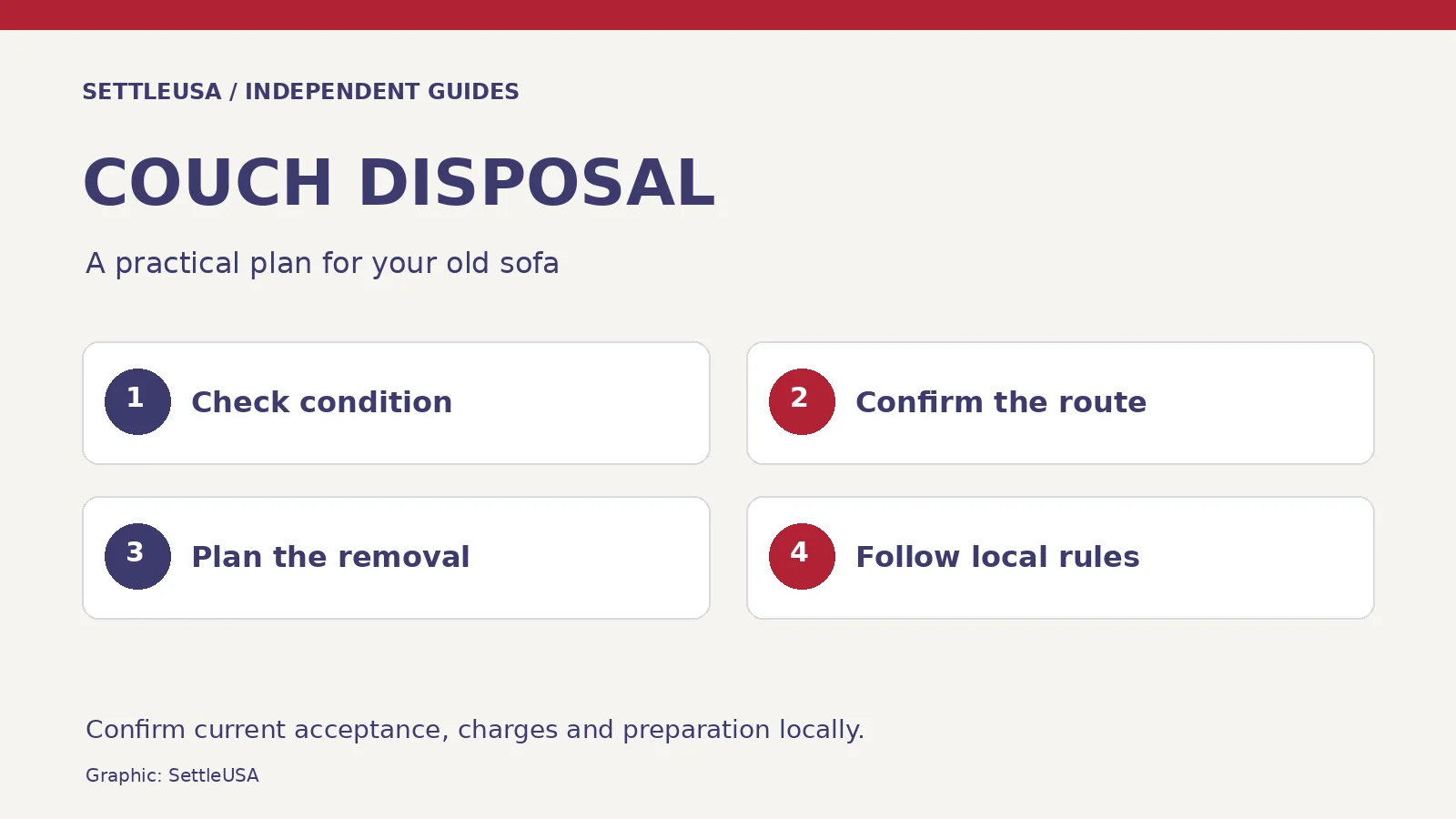
First decide whether you want to pass the sofa on or dispose of it. Describe its actual condition: upholstery, frame, cushions, legs and any sleeper or reclining mechanism. Take photos showing the whole couch and any problem areas. This makes an acceptance decision easier for a charity, recipient or collector.
Use your move-out or replacement delivery date as the deadline. Give yourself time to check a reuse option and confirm a disposal alternative. Do not count a message from an interested buyer as a completed removal arrangement.
For a sound sofa, ask about repair, reuse or donation. New York’s Department of Environmental Conservation includes repairing and passing on furniture in its reuse guidance. For a couch that cannot be reused, ask your city or waste provider about its bulky-item route.
This is a national planning guide, checked November 12, 2026. Acceptance, price and set-out rules must come from your own provider. SettleUSA is independent and does not book a collection or authorize leaving furniture in public space.
Check city collection before paying for removal
Start with the bulk trash directory and identify the service for your address. Read beyond the item list: check which buildings qualify, whether you need a booking and when the couch may be outside. Ask whether indoor removal is included or whether you must arrange the carry.
For Dallas bulk trash pickup, Dallas Sanitation lists household furniture as accepted bulky material. It also warns about charges and enforcement for early or noncompliant set-outs. Check your address’s collection instructions before setting out the sofa.
For bulky item pickup Los Angeles residents should use LASAN’s official request instructions. The page lists couches, tables and chairs. Confirm the service arrangement for your property and request collection before moving the couch outside.
Our Phoenix guide and Washington, DC guide provide other local starting points. Treat these as separate city services. A free collection in one city is not evidence of free removal at your address.
How to arrange furniture donation pick up
Contact the specific charity, reuse organization or community group before offering your sofa. EPA’s donation guidance says local organizations may accept unwanted furniture. Acceptance is conditional: ask about upholstery, damage and any size or access restrictions rather than assuming the organization can take everything.
Send photos and measurements, then ask whether acceptance is final or subject to the crew’s inspection. Explain stairs, narrow doors, parking and any elevator booking. A donation inquiry should cover the couch you actually have, including stains or damage visible only when cushions are lifted.
Ask whether collection is available, whether it has a charge and where the crew will collect from. “Pickup” could mean a different arrangement from the indoor carry you need. Confirm the date and access before canceling another removal option.
Keep the sofa protected until the agreed handoff. Do not leave it at a closed donation center or rely on an unattended curbside donation sign. If it is rejected on inspection, ask the organization why, then use your backup route rather than leaving the item behind.
Sell or give away a usable sofa
If the couch is suitable for reuse, consider a direct sale or agreed giveaway. Include dimensions, photos and an honest condition description. Explain whether it comes apart and whether the person collecting it must provide helpers. Decide on a handoff location and a time you can actually accommodate.
For a sectional, list each piece and label the connecting arrangement. For a sleeper sofa, disclose the pullout bed and include its condition. Send the recipient the measurements they need to compare with their doorways, vehicle and available space.
Agree who is carrying the sofa, who is supplying transport and what happens if it does not fit. Do not dismantle or carry it outside before those details are settled. A no-show should trigger your backup plan, not an indefinite stay on the sidewalk.
If you are researching how to get rid of a mattress inside a sleeper sofa, ask whether the recipient or collector accepts both parts. Do not describe a sofa bed as an ordinary couch if that leaves out an important part of the job.
Could repair avoid sofa disposal?
Consider a repair assessment when the issue is limited and you would otherwise keep the couch. Ask a furniture repairer or upholsterer whether the frame, cushions or covering can be repaired. Request a quote before deciding: this guide does not assume repair will be cheaper than replacement.
The New York DEC reuse and repair guide encourages keeping goods in use and includes furniture as a reuse opportunity. Use that as a starting point for asking about repair, rather than a reason to pass a damaged or unsafe couch to someone else.
Compare the complete options: repair and transport, replacement and haul-away, or disposal alone. If you live in a furnished rental, check with the owner before repairing, giving away or discarding their furniture. Agree what should happen to the existing sofa before arranging a crew.
Ask your new-sofa retailer about haul-away
Before ordering a replacement, check whether your retailer offers old-sofa removal at your address. Ask whether it is a separate service or part of delivery. Get the answer in writing alongside the order; do not infer removal from the words “delivery” or “installation.”
Describe the couch, number of sectional pieces and access. Ask about a sleeper mechanism, stairs and whether the old sofa must be in a particular room or at the curb. Confirm any condition exclusions and the total charge before agreeing to the service.
Ask what happens if the replacement delivery changes or the crew cannot remove the old sofa. You may need a separate confirmed removal date. Keep the old couch in an approved place while resolving the arrangement, especially in buildings with shared access or loading areas.
Compare junk removal services with the same job details
Give each company the same item list, photos and access description so you can compare quotes. Include sectionals, an ottoman, a sleeper mattress and other furniture that also needs to go. Ask whether the estimate covers the full job or will change after the crew arrives.
Clarify charges for stairs, long carries, extra pieces and disposal. Ask whether the crew removes furniture from inside or expects you to put it outside. Request the final payment terms and cancellation arrangements in writing before the collection day.
Ask which facility will receive the couch and whether the company can document the handoff. If you are told it will be donated or recycled, ask what that means for an upholstered sofa in its current condition. Avoid treating a general recycling claim as confirmed acceptance of this item.
If you suspect pests, disclose that before requesting a quote. Ask whether the company handles affected furniture and what preparation it requires. Do not conceal the issue to secure a booking; you need a service that knowingly accepts the actual job.
Check transfer station and furniture recycling options
If you have transport, ask your city or county for a facility that accepts upholstered furniture. Confirm the current fee, address eligibility, opening times and any booking requirement. State whether you have a couch, recliner or several sectional pieces; do not simply ask if the facility takes “trash.”
Ask specifically about a whole sofa. A site accepting scrap metal or clean wood may have a different answer for furniture containing upholstery, foam and mixed parts. Confirm whether it wants the couch intact before removing the covering or dismantling the frame.
Washington, DC’s DPW bulk page describes a resident drop-off alternative at Fort Totten. That is a local option with its own conditions, not permission to take furniture to any transfer station. Check your own receiving facility before arranging a vehicle.
For a mixed cleanout, separate the questions by item. A sofa booking does not settle what to do with appliances, paint or tires. Ask your collector about appliance-specific disposal requirements before adding a refrigerator to a couch collection.
Prepare a sectional, recliner or sleeper sofa for pickup
Follow the receiving service’s instructions first. Ask whether it wants cushions attached, sectional pieces separated or loose parts secured. Do not assume dismantling lowers the fee or changes an item limit. Tell the provider exactly how many pieces will be waiting.
Plan the route from the room to the collection point. Measure doorways and turns, check the elevator arrangement and identify who will handle the carry. If you cannot move the couch safely, request a service that includes the removal you need.
New York City’s furniture disposal page advises taking furniture apart where possible and bundling smaller pieces. That is NYC guidance; check your own collector’s instructions. Do not extend its advice into a requirement that every sofa everywhere must be cut up.
For a powered recliner, ask the manufacturer or removal provider how to prepare it before moving it. Do not experiment with wiring or a mechanism under load. Explain that it is powered when booking so the service can give item-specific instructions.
Bed bugs, illegal dumping and a missed pickup
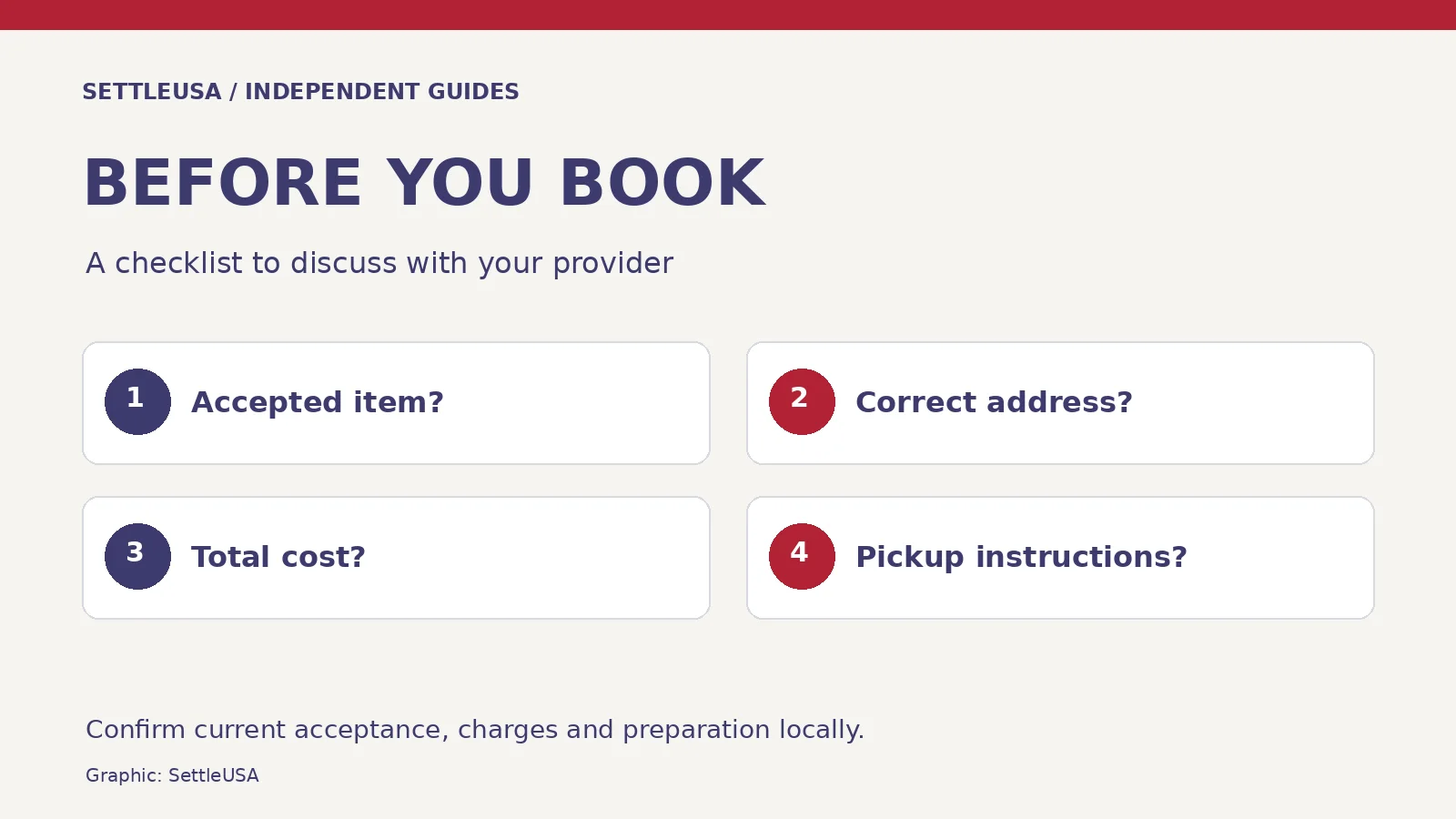
If bed bugs are involved, pause reuse plans and contact your collector. EPA’s bed bug guidance says not to discard furniture if the bugs can safely be eliminated. When affected furniture must be discarded, prevent someone else from taking it for reuse and arrange prompt collection.
Ask about wrapping and labeling before carrying the couch through your building. Do not assume mattress bagging rules automatically apply to all sofas. Coordinate the route with your building manager and use the collector’s preparation instructions for the affected item.
Only place the couch outside within your authorized collection arrangements. DC DPW warns that items in public space outside their collection appointment can result in a sanitation violation ticket. This guide does not quote a national dumping fine or assume that a giveaway sign avoids enforcement.
For a missed collection, retain your booking reference and photos of the set-out. Contact the service to ask why it was missed and whether the item needs different preparation. Ask where to keep it pending the new arrangement; do not add it to a neighbor’s pile.
Frequently asked questions
Is couch disposal free?
Check your own city or provider. Some municipal services include accepted furniture, but eligibility, fees and booking requirements are local. Indoor removal and private hauling need a separate confirmation.
How do I get rid of furniture if I cannot lift it?
Ask for a service that explicitly includes removal from inside your home. Describe stairs, doors and the sofa’s construction before accepting a quote.
Can I leave a couch on the curb with a free sign?
Do not assume that a sign authorizes curbside placement. Arrange an agreed handoff or follow your city’s collection appointment and set-out rules.
Does furniture donation pick up include any sofa?
No acceptance is guaranteed. Ask the specific organization about condition, size, access, charges and whether final acceptance depends on inspection.
Will junk removal services recycle my whole couch?
Ask the company which facility accepts the couch and what parts are recovered. Confirm the destination rather than relying on a general recycling claim.
What should I do with the mattress in a sofa bed?
Describe the sleeper sofa and mattress when booking. Ask whether the mattress needs separate preparation or counts as another item.
Can I donate a couch with bed bugs?
Do not offer affected furniture as ready for reuse. Ask your collector about appropriate handling and follow EPA’s advice to prevent reuse if the item must be discarded because the pests cannot safely be eliminated.
Official sources
- EPA — What You Can DoChecked
- New York DEC — Get Started with Reuse and RepairChecked
- EPA — Do-it-yourself Bed Bug ControlChecked
- NYC Department of Sanitation — Furniture, Mattresses, and RugsChecked
- DC DPW — Bulk Trash CollectionChecked
- Dallas Sanitation Services — Brush and Bulky Item CollectionChecked
- Los Angeles Sanitation and Environment — Schedule a Bulky Item PickupChecked
Source review: complete. Last checked .
Independent guide, not affiliated with SSA, VA, USDA or any government agency. Not financial or legal advice. Confirm your circumstances with the responsible agency or service.