
Appliance pickup and disposal: fridges, washers and more
How do you arrange pickup of an old appliance?
Start with your electric utility, city waste department or replacement retailer, then confirm that the service accepts your exact appliance. Refrigerators, freezers and air conditioners need special refrigerant handling. Ask who handles recovery, what removal costs and where to place the unit before booking an accepted pickup.
Published · Updated
As of November 12, 2026, appliance disposal rules vary by city and equipment type. A washer and a refrigerator may need different services. This independent SettleUSA guide explains the routes to check and the questions to ask before moving anything outside.
In this guide
- Appliance pickup: identify the unit before booking
- Why refrigerator disposal needs refrigerant recovery
- What happened to EPA’s Responsible Appliance Disposal program?
- Check utility rebates and refrigerator recycling programs
- Arrange retailer haul-away before delivery
- City appliance disposal: Phoenix, Houston and Columbus
- Ask a scrap metal recycler about the whole appliance
- Can you donate a working washer or other appliance?
- What to confirm before appliance pickup day
- Frequently asked questions
- Official sources
Appliance pickup: identify the unit before booking
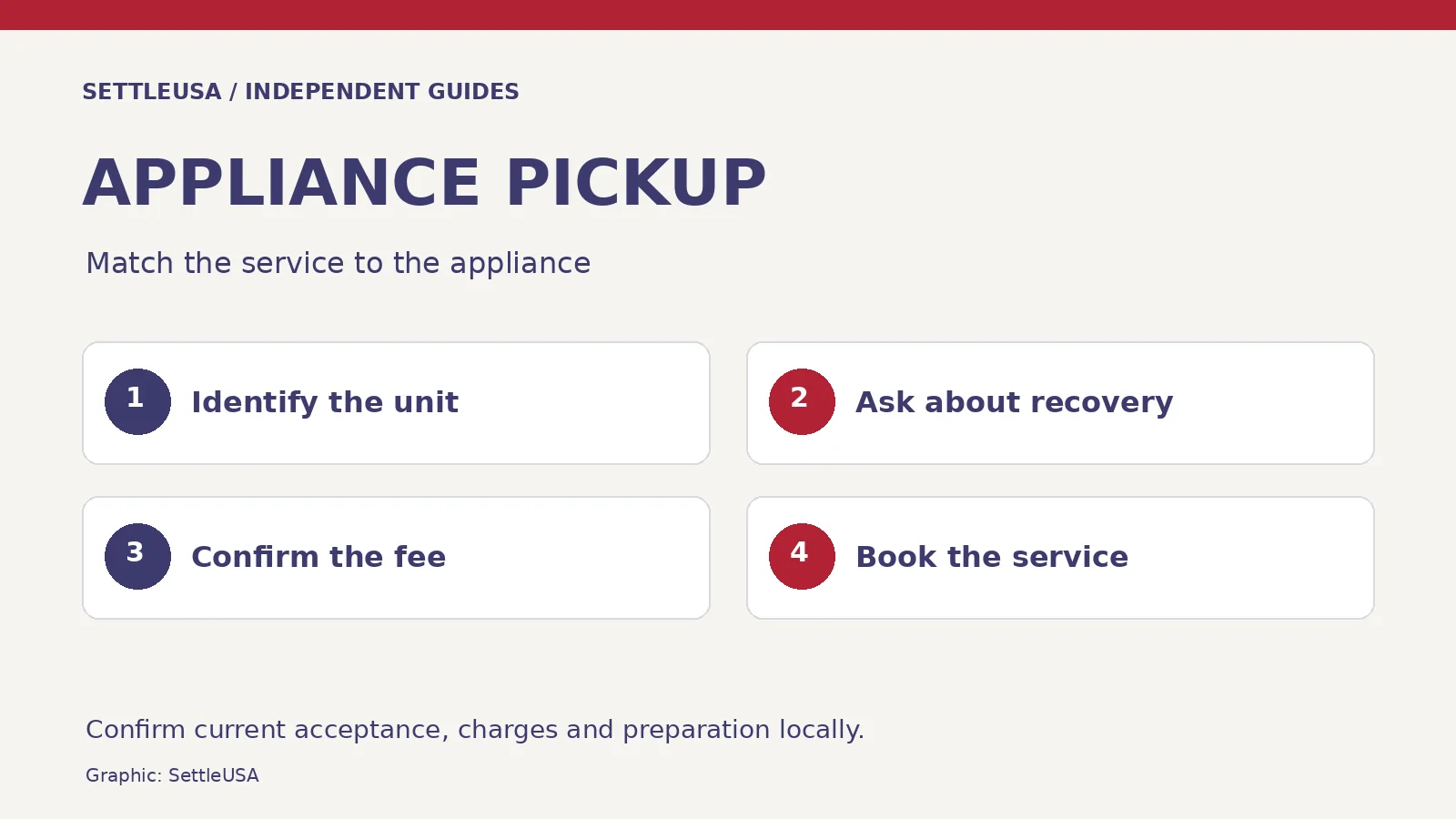
Write down the appliance type, model, approximate dimensions and whether it works. Photograph the model label if you can reach it safely. Tell the provider whether the unit is inside, upstairs or already disconnected. Include every item you want removed so the booking describes the whole job.
For a refrigerator or freezer, ask specifically about refrigerant recovery. For a washer, dryer, stove or dishwasher, ask whether it belongs in the city’s non-refrigerant appliance stream. Columbus’s bulk collection page makes this distinction: it accepts non-refrigerant appliances but excludes refrigerated appliances.
Treat a quote as a proposed service until acceptance is confirmed. Ask whether the crew removes the appliance from inside the home or collects only at the curb. If you cannot carry it yourself, make that clear before choosing a city pickup or recycler drop-off.
For a mixed cleanout, keep the appliance booking separate from your furniture plan. Our mattress disposal and couch disposal guides cover those items. One appointment should list all accepted pieces; do not assume that a truck booked for furniture also handles a refrigerator.
Why refrigerator disposal needs refrigerant recovery
EPA’s Clean Air Act section 608 guidance explains the prohibition on intentionally venting ozone-depleting refrigerants and substitutes such as HFCs during equipment disposal. Do not cut refrigerant lines or release gas to make a refrigerator easier to scrap. Ask the receiving service how recovery will be handled.
Refrigerant recovery and technician certification are related but different questions. EPA’s technician questions and answers describes a disposal certification exception for factory-sealed small appliances with five pounds or less of refrigerant. That exception does not give a homeowner permission to vent refrigerant or ignore a city’s collection requirements.
Ask the collector what documentation it needs before paying for a separate recovery visit. Describe any previous work on the unit and keep the paperwork you received. Do not label an appliance “empty” based only on a broken cooling system; ask the receiving facility how to establish its condition.
What happened to EPA’s Responsible Appliance Disposal program?
As of November 12, 2026, EPA presents RAD as “Program History (2006—2025)”. The voluntary Responsible Appliance Disposal program promoted recovery of refrigerants and chemicals in insulation foam, alongside materials recycling and proper handling of hazardous components. Describe it as a historical program when comparing current disposal services.
ENERGY STAR’s recycling page still refers readers to RAD. Use its utility, retailer, municipal and scrap recycler suggestions as starting points, then ask each provider about its current process. An old RAD reference alone does not establish that a local collection service is operating today.
For a practical comparison, ask two questions: who recovers refrigerant, and what happens to the cabinet and insulation afterward? Request the recycler’s name if a retailer or collection company hands the unit to someone else. Keep those answers with your booking rather than relying on a recycling symbol in an advertisement.
Check utility rebates and refrigerator recycling programs
ENERGY STAR says local utilities and energy-efficiency organizations may offer refrigerator or freezer recycling programs, sometimes with cash or bill credits. There is no national rebate amount in this guide. Check your own utility’s current offer before adding any payment to your budget.
Ask whether the program serves your electricity account, whether the appliance must work, and which sizes and types qualify. EPA’s consumer guidance specifically warns that turn-in programs can have condition, age or dimension requirements. A program for a working second refrigerator may not accept a failed freezer.
When contacting the utility, have your account service address and appliance details ready. Ask whether approval is needed before removal and when any payment is issued. If the program cannot confirm acceptance, compare another route while the appliance is still available for inspection.
Arrange retailer haul-away before delivery
ENERGY STAR’s retailer guidance says many retailers collect an old refrigerator or freezer when delivering a replacement. Ask whether your order includes that service and whether the unit will be recycled or resold. Get the removal arrangement written onto the order before delivery day.
Ask for the complete price, including inside removal, stairs, difficult access and any separate disposal charge. Request instructions for disconnecting the old unit and preparing the space. For gas, water or built-in connections, ask who is responsible and arrange appropriate help rather than improvising on delivery day.
Confirm whether the old and new appliances must be the same type. If you are replacing a washer but also want a freezer removed, list both. Ask what happens if the crew refuses the old unit and whether the delivery can proceed while you arrange an alternative removal.
City appliance disposal: Phoenix, Houston and Columbus
For bulk trash pickup Phoenix, the city’s ordinary bulk rules exclude large refrigerant appliances and direct residents to appliance recycling. Phoenix offers scheduled appliance pickup for a fee and transfer-station options. Check eligibility and the applicable charge rather than placing a fridge in a general bulk pile.
For bulk trash pickup Houston, Houston lists stoves, washers, dryers and water heaters among accepted appliances. Refrigerators and freezers require a certified technician’s tag showing refrigerant removal. Ask about that preparation before scheduling the work; an intact refrigerant appliance is not ready for this collection route.
For Columbus bulk pickup, the city requires a scheduled collection and accepts appliances without refrigerants, such as washers and dishwashers. Refrigerators, freezers, dehumidifiers and air conditioners are on its unacceptable list. Check current exclusions with Columbus before booking, even after refrigerant recovery.
For bulky item pickup Los Angeles, LASAN’s page prohibits commercial appliances. Confirm residential appliance handling directly with LASAN, especially for cooling equipment. Use our Los Angeles guide to find the local process; this page does not promise refrigerant-appliance acceptance there.
Ask a scrap metal recycler about the whole appliance
ENERGY STAR includes scrap metal recyclers among the routes for old refrigerators and freezers and recommends asking for assurance of proper recycling. Call before loading. Ask whether the site takes an intact unit with refrigerant or requires recovery beforehand, and whether it handles your other appliance types.
Describe the whole item rather than asking only whether the yard buys steel. Ask about drop-off versus pickup, unloading help, preparation and any charge. Do not assume scrap value pays for transport or refrigerant handling. Request a clear total before choosing a collector.
If the recycler asks for prior recovery, ask which record it accepts and arrange the work through a suitable provider. Avoid dismantling the appliance to fit a vehicle or obtain a higher scrap price. Compare the full accepted route, including preparation and transport, with the city or retailer alternative.
Can you donate a working washer or other appliance?
Phoenix’s appliance page points residents toward donation of working appliances through a local nonprofit. That is a local option, not a national acceptance promise. For a washer, dryer or other usable item, send the receiving organization the model, condition and photographs before arranging a handoff.
For an older refrigerator, consider the destination as well as whether it still runs. EPA’s consumer page cautions against resale of inefficient older refrigerated equipment. Ask about recycling if the proposed reuse simply keeps an inefficient unit operating as a spare refrigerator.
If donation is agreed, confirm who carries the item, who supplies transport and what final inspection is required. Explain faults plainly. Keep an alternative booking in mind if acceptance depends on inspection, and do not leave an appliance outside a closed donation site.
What to confirm before appliance pickup day
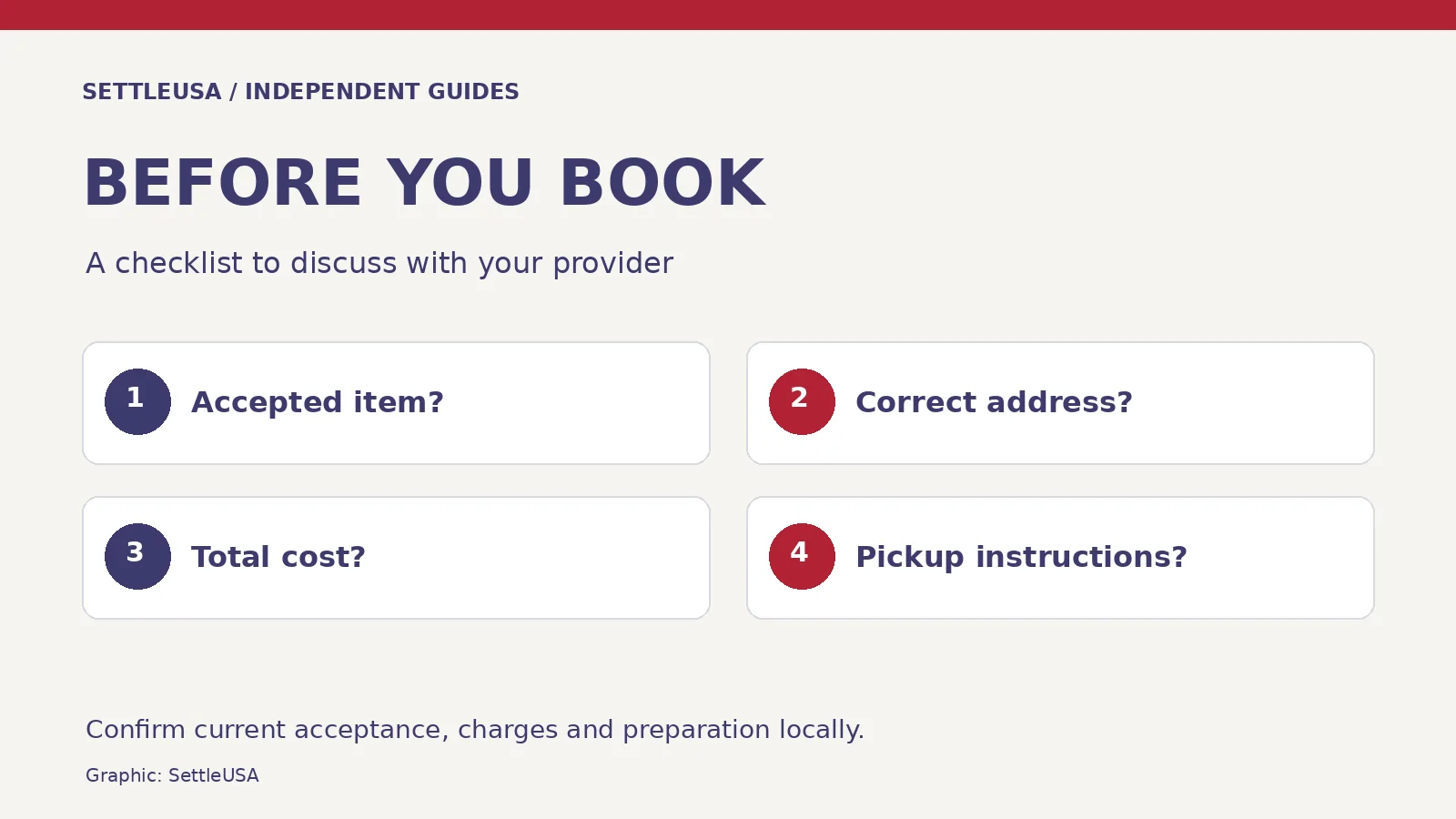
Use the checklist below to turn an inquiry into a workable appointment. Keep the confirmation, item list and any recovery paperwork together. If the booking changes, ask for revised set-out instructions before moving the unit. Check the provider’s directions again close to collection day.
Ask for help if the preparation instructions conflict. For example, Phoenix’s appliance page contains both door-removal instructions for refrigerators and freezers and a general reference to securing doors. Confirm the exact preparation with Public Works before set-out rather than choosing between those statements yourself.
If collection is missed, contact the booked provider with the reference number, item type and location. Ask whether it can return and where the item should wait. Keep any remaining refrigerant issue in the report so a replacement crew is not sent with the wrong equipment.
Frequently asked questions
Is appliance pickup free?
Check your city, utility and retailer. Charges and eligibility differ, and a rebate program may require a working appliance of a qualifying size. Get the complete removal price before booking.
Can a scrap recycler take a refrigerator with refrigerant?
Ask the specific recycler whether it handles refrigerant recovery or requires prior recovery and documentation. Do not vent refrigerant or cut the cooling lines yourself.
Is RAD still an active EPA program?
EPA now labels RAD as program history covering 2006–2025. Check the current collector’s actual recycling arrangements rather than relying on an older RAD reference.
Does Columbus bulk pickup accept refrigerators?
Columbus lists refrigerated appliances as unacceptable for city bulk collection. It accepts non-refrigerant appliances such as washing machines and dishwashers through scheduled collection.
Does Houston need a refrigerant-removal tag?
Houston’s heavy trash page requires a certified technician’s tag showing refrigerant removal for refrigerators and freezers. Confirm that preparation before setting out the appliance.
Can I include paint or tires with appliance disposal?
Check each item separately. Paint may need a paint recycling or household hazardous waste route, and tire acceptance varies by city; an appliance booking does not establish acceptance of either.
Official sources
- US Environmental Protection Agency — Appliance Disposal and RAD program historyChecked
- US Environmental Protection Agency — Stationary Refrigeration and Air Conditioning: section 608Checked
- US Environmental Protection Agency — Section 608 technician questions and answersChecked
- ENERGY STAR — Find a Fridge or Freezer Recycling ProgramChecked
- City of Phoenix — Appliance RecyclingChecked
- City of Phoenix — Bulk TrashChecked
- City of Houston — Heavy Trash CollectionChecked
- City of Columbus — Bulk CollectionChecked
- LA Sanitation & Environment — Schedule a Bulky Item PickupChecked
Source review: complete. Last checked .
Independent guide, not affiliated with SSA, VA, USDA or any government agency. Not financial or legal advice. Confirm your circumstances with the responsible agency or service.